Friday, July 16, 2010

The American Library in Paris--July 9, 2010

Just up the street from the Eiffel Tower is one of the nicest small libraries I've ever seen.

The American Library in Paris is a private membership library that was founded by the American Library Association following World War II. It primarily functions like a public library, but also serves select research library functions. The library has about 2,200 members and serves as a library and community center for the English speaking population of Paris.


It was originally intended, in part, to help train French librarians. That portion of the mission did not last, but its mission to provide English language library service has continued. The library once had branches in other large towns in France, but those have been absorbed by university libraries or closed. As far as our guide was aware, this library is the only one of its kind in continental Europe.
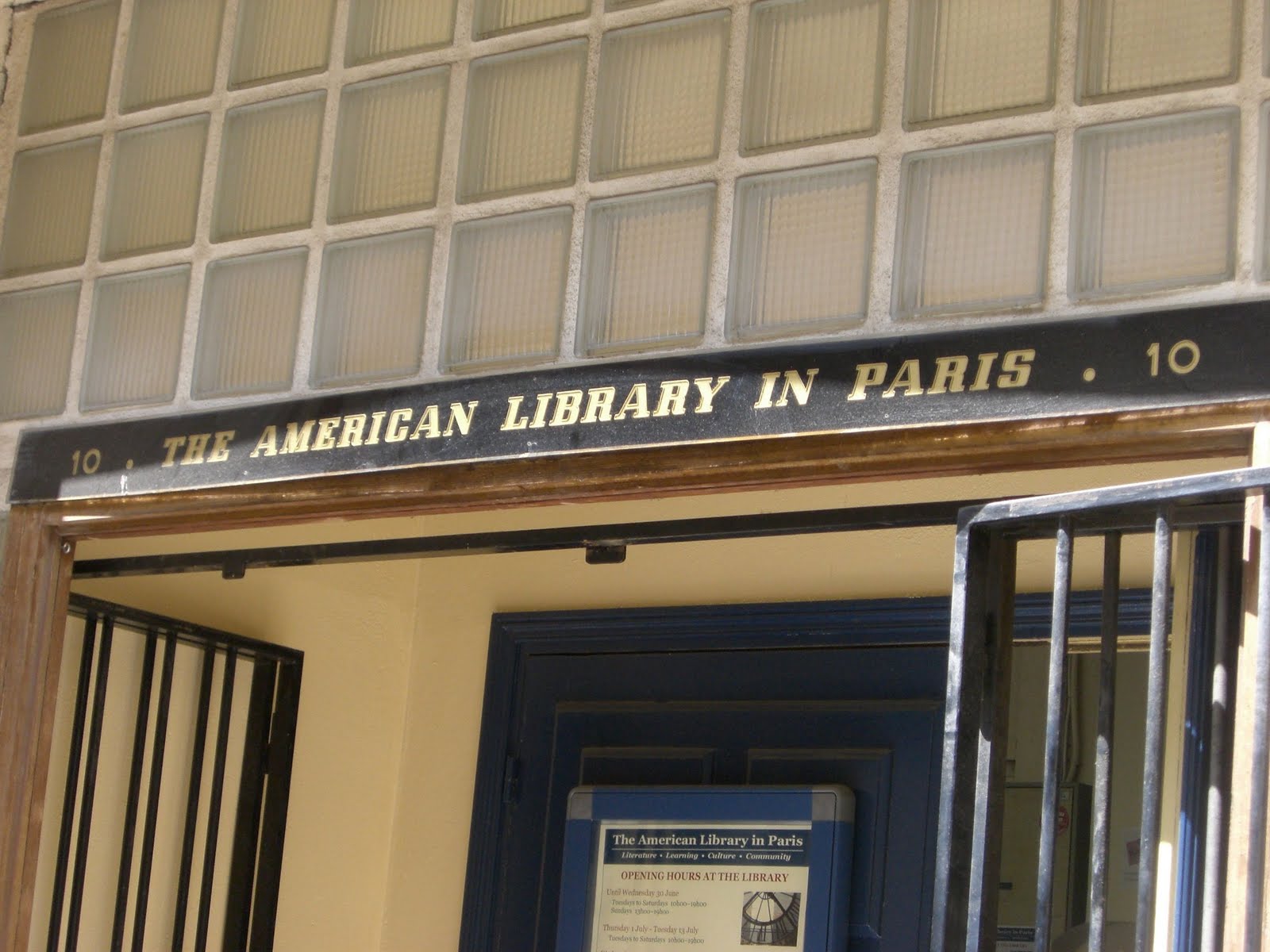

The library caters to American expatriates, English speakers, French people who study English, researchers, and patrons from across Europe. The collection consists of approximately 113,000 items and has more extensive resources than many French universities with American studies programs. The collection is strong in American culture, political science, literature, literary criticism, and history of North America and the English speaking world. It has little in the way of science and technology. The library also has a small rare book collection (acquired mostly through donations) and a collection of artifacts (mostly books signed by former library patrons).


The library is a non-profit organization and is incorporated in the United States. It is run by a board of trustees that deals with policy and fundraising and a staff that deals with the operational needs of the library. The staff consists of approximately 10-15 people. Additionally, the library is partially staffed by a group of approximately 60 volunteers who each work 4 hours a week.

The library provides a wide variety of services. It provides computer access, free wifi, children’s and adults’ programming, bibliographic instruction (in the library and at local schools), exhibitions, talks, cultural programs, and movie nights.


Wednesday, July 14, 2010

Bibliothèque nationale de France (National Library of France)--July 9, 2010

Over the weekend, a group from our program went on a short visit to Paris. It was largely a non-academic trip, but we couldn't resist visiting a few libraries. We started out with the old and new locations of the Bibliothèque nationale.

The Richelieu Library is the old location of the National Library. The main location is now at a different site, but this space has reading rooms and exhibit space. Unfortunately, we were not able to see much beyond the few public spaces, but we were able to get a sense of the atmosphere of the place.


The new location is the Francois-Mitterrand Library. It is an enormous and imposing facility. Each building is designed to look like a book. Unfortunately, we did not have time to tour this location, but a virtual tour is available on the BNF website.


Thursday, July 8, 2010

British Library--July 8, 2010

On July 8, we visited the British Library, the copyright deposit library for everything published in the United Kingdom and Ireland. The British library's collection is approximately 170 million items and takes up somewhere between 800 and 900 miles of linear shelving. The collection expands to fill an additional 8 miles of shelves every year. Approximately 35 million of those items reside in the London location.


The London location was designed by Professor Sir Colin St. John Wilson. It was intended to resemble a navy ship. The building opened in 1997.


The library complex takes up a complete city block near St. Pancras Train Station and features the largest subterranean tower in Europe.


As our tour guide described it to us, the purpose of the British Library (as defined by statute) is to 1) acquire published output of the nation, 2) keep that output forever, and 3) make that output available to the public within one month of its publication. It also serves in a leadership capacity for library and information science in the UK.


The library is a beautiful and interesting building to explore. It has many attractive touches such as this giant sculpture of a medieval library book, complete with ball and chain.

These touch screen "Turning the Pages" kiosks are available throughout the library. They allow the user to flip through rare books from the library's collection. I looked at Jane Austen's The History of England (juvenilia) and Henry VIII's Psalter. I particularly enjoyed the optional audio commentary about points of interest in the items. I think these kiosks are a great way to provide access to digital collections to the public.


This is a model of the library building. Its ship-like shape is much more apparent when looking at the model.

Most of the London collection is stored in the underground stacks (shown in the model above). This storage area is kept at approximately 17 degrees Celsius and 50% humidity. These conditions are an attempt to find a balance between what is best for the books and what is comfortable for the people who work in the area.

The stacks are closed to the public and items are delivered from the stacks to the reading rooms by means of an Automated Book Retrieval System. The reader requests an item through an electronic system. These photos show a dispatch room that is part of the system.


The request generates 2 printed slips. A Library Assistant locates the requested item in the stacks. One slip is left in the item's spot on the shelf and the other is placed in the item. The barcode on the book slip is scanned and placed in a bin on the mechanical book handling system. The barcode on the bin is also scanned. The item and bin are checked by optical scanners throughout the journey to their final destination.

The ABRS is remarkably efficient and runs smoothly. It includes about 1.25 miles of rolling track and has over 22,000 possible routs. The computer system monitors traffic and congestion and can reroute items in order move them more quickly. The goal is for items to arrive within one hour and 10 minutes of the reader's request. The last system breakdown occurred in November of 2007.


The King's Library is a collection of books donated by George III. One of the conditions of the donation was that it always be displayed to the public. In order to achieve this, the books are displayed in a glass tower in the middle of the library.


Charles Dickens Museum--July 7,2010


Charles Dickens and his young family lived at this house on Doughty street from 1837 to 183. Dickens wrote some of his well known early works, including Pickwick Papers and Oliver Twist while living in this house.

The house has been furnished to resemble how it would have looked during Dickens' lifetime. Many personal items and pieces of furniture owned by Dickens are included.

There is a small library downstairs in what was originally a kitchen. The collection includes copies of different editions of Dickens' works as well as first and rare editions. As an example, over a hundred different editions of Oliver Twist are displayed. Only a small portion of the museum's collection is on view.


The museum is operated by The Dickens Fellowship, an international organization dedicated to furthering interest and enthusiasm in Dickens life and works. For more information, please see the website for the Charles Dickens Museum.


British Museum Libraries--July 7, 2010

On July 7, we visited the Paul Hamlyn Library and the Central Library at the British Museum.

The Paul Hamlyn Library is a reference library that is open to any visitor of the British Museum. The public space is one room (shown below). It includes approximately 25,000 volumes on topics related to the museum including archeology, art history, anthropology, history, and museum studies. The reading room has public computers that provide access to the library's catalog, electronic resources, and specially selected web links. No general Internet access is provided. The library also includes a children's area and a selection of resources for teachers.


In order to reach the Central Library, our guide took us through a hidden door in the Enlightenment Gallery of the museum (see below).


The (locked) door is disguised to look like shelves. We had just viewed the Enlightenment Gallery before the tour and failed to notice the door.


The central library is primarily a reference library for museum staff. It is available by appointment to researchers if the material they need cannot be obtained elsewhere.

The collection is housed in the "long room," an area that runs the length of the Enlightenment Gallery. Only a small portion of the area is used by the library. The rest is used for storage by the museum. The "long room" includes the original fixtures, including an iron gallery and wooden shelving with locking glass doors. The libraries have changed locations within the museum many times and this is the first time that the "long room" has housed a library in many years.

The central library collection focuses heavily on museum management. It also includes rare books, works related to the museum, and museum ephemera. As an example, the library has a collection of museum posters dating back to the 1930's. The rare books from the House of Commons Collection (displayed in the Enlightenment Gallery) are also part of the library's collection.

The items in the central library collection are classified by a home-grown system based around museum departments. The items in the Hamlyn Library are classified using Dewey. Both collections are searchable by an electronic catalog. Other departmental libraries are adding their collections to this catalog as well. The library is a member of the Research Libraries UK consortium and participates in their union catalog.


Barbican Library--July 6, 2010

The Barbican Library is a a public library located in the Barbican Center in the City of London.


The Barbican is an arts and residential complex located in the City of London. It was built on a site that was bombed during WW2. To paraphrase our tour guide, the Barbican was "thought of in the 50's, planned in the 60's, designed and build in the 70's, and opened in the 80's. For a more compete history of the Barbican, please see the Barbican's History Page.

The complex itself is slightly surreal. It is right in the heart of the City of London, yet it is strangely quiet and peaceful. The complex is a little difficult to get into from the outside world. The best way to find the library is to arrive at the Barbican Underground station and follow the line of yellow bricks that winds its way through the complex. It leads directly to the main arts complex that also houses the library.


The Barbican Library is the main lending library for the City of London. Other libraries are located at Guildhall, Shoe Lane, and Camomile Street.

We were given a tour of the beautiful library by one of the librarians, John Lake. The facility is attractive and neat. In general, it appears to function very much like the public libraries I am used to in the States.


The lobby outside the library features a self check-in kiosk, access to the library catalog, and a computer with Internet access. This area is available to patrons whenever the Barbican center building is open, even if the library is closed. The self check-in kiosk (shown above) asks the user to swipe their library card and then scan items that they are returning. After the patron successfully completes these tasks, the book drop door will unlock and allow them to insert the books. The patron receives a receipt confirming that the books have been returned.

The information desk is located at the front of the library and answers inquiries about the city, the Barbican center, and cultural events, in addition to more traditional reference requests.


The collection is organized much like a typical American public library. Non-fiction is organized by Dewey classification. Each major subject is indicated by clear signage. Books are arranged on attractive wooden shelving that gives the library a cozy feel.

The space is organized to avoid long lines of shelves. Each row contains 2 or 3 sections of shelving. Shelves are arranged in such a way to create study areas and to take advantage of natural light coming in through the copious windows.


Interestingly, libraries in the UK are required to restrict access to age-restricted titles. They do actively check identification and signs such as the one above are posted throughout the library. There is also a charge for checking out DVDs.


The fiction shelves are arranged in "propeller" shapes. The are intended to "move people from place to place" in the library. The layout seems a little like a bookstore and it seems like it would be comfortable to meander through and browse. Comfortable seating areas are available throughout the fiction area.


Displays like the one shown above appear throughout the fiction area. Some are thematic and some relate to specific events or programs. One featured free copies of an an anthology that patrons were encouraged to take.


Catalog computers are in a separate area from Internet computers. The catalog is also available online for patrons to use outside the library.


The Barbican Library includes a large music library. In addition to audio recordings, it features sheet music, scores, music theory, and other non-fiction works related to music. There are listening stations where patrons can preview items.

Interestingly, the music library has created its own Song Index to help users find specific songs in the large collection of sheet music anthologies.

By law, libraries in the UK may not lend out new audio recordings until they have been publicly released for three months. The music library makes these titles available at an in-house listening station until they are able to be checked out.

Audio recordings are organized in a unique way that goes beyond broad genre categories. For example, patrons can browse by the gender of the artist. They can also browse by by very specific categories and sub-genres.


The City of London Libraries does a summer reading club. The theme this year is "Space Hop."

They are also affiliated with Bookstart, a program that aims to provide packets of books to every baby born in the UK.


The Barbican Library is required to do a user survey every two years. In between these major surveys, they seek feedback from the friends group and through formal comment forms. They have also had great success with a process called "informal comments recording" which provides a way for staff to record informal comments and/or complaints that they hear/overhear from patrons.

Tuesday, July 6, 2010

St. Paul's Cathedral Library--July 5, 2010

I have an image in my mind of my perfect library. The image has changed over the years, influenced by the Biltmore House Library, the library in Disney's Beauty and the Beast, and Harry Potter. I never thought I'd see this library in real life, but I found myself there yesterday when I walked into the St. Paul's Cathedral Library:


Our tour of the St. Paul's Library was led by the librarian, Joseph Wisdom. He brought us part way up the circular stairs that lead to dome and led us off a side exit into a hallway in the triforium level. We passed the lapadarium, a collection of stones and fragments from previous cathedrals that have stood on the St. Paul's site. The hall felt unused and mysterious, almost as if it contained a doorway to another world.

We took a side trip to view the Geometric Staircase from above. The image below shows the staircase from below, but it gives the general idea.


We also visited the room in the north triforium that houses Christopher Wren's Great Model of his original design for the Cathedral. The room was originally intended by Wren to be a library and books appear as a prominent design element in the stonework.


When we entered the actual library, I was struck by the scent of old books. Faint sunlight came in through high windows. Despite the high arched ceilings, the room felt cozy and secret. It was a little like finding that secret passageway into a room forgotten by time. The lower walls are lined with floor to ceiling shelves of leather-bound books. A cozy fireplace stands at one end of the room The gallery (an afterthought in the design of the room) includes beautiful brackets designed by Jonathan Maine. The walls of the gallery are also lined with shelves. The open space of the room is filled with tables covered with books.

The library is run by a librarian, a conservator, a collections manager, and an architectural archivist. The librarian was actually a member of the clergy until the mid 20th century.

The books and manuscripts from the previous cathedral library were destroyed along with the cathedral in the Great Fire of London in 1066. The present library was planned as a part of Christopher Wren's design for the new cathedral. The new collection was kick-started by a donation of 2000 books by Henry Compton, Bishop of London.

The cathedral library collection is heavily focused on works of theology. It also presently collects items concerning Christopher Wren, the life of the church in the city of London, and St. Paul's alumni materials. The items are cataloged in accordance with AACR. Records are imported where possible from OCLC and records for unique items are cataloged as needed.

The library is primarily for use by the Church. Access is granted to outside researchers who demonstrate a need for item(s) in the collection. The library is considering making the library more accessible to the public, possibly by creating a public reading room. They are currently evaluating environmental, preservation, and security concerns and are working to come up with a solution.

For more information, please see The St. Paul's Cathedral Library website.

Images courtesy of St. Paul's Cathedral Website.